Author: metraltus

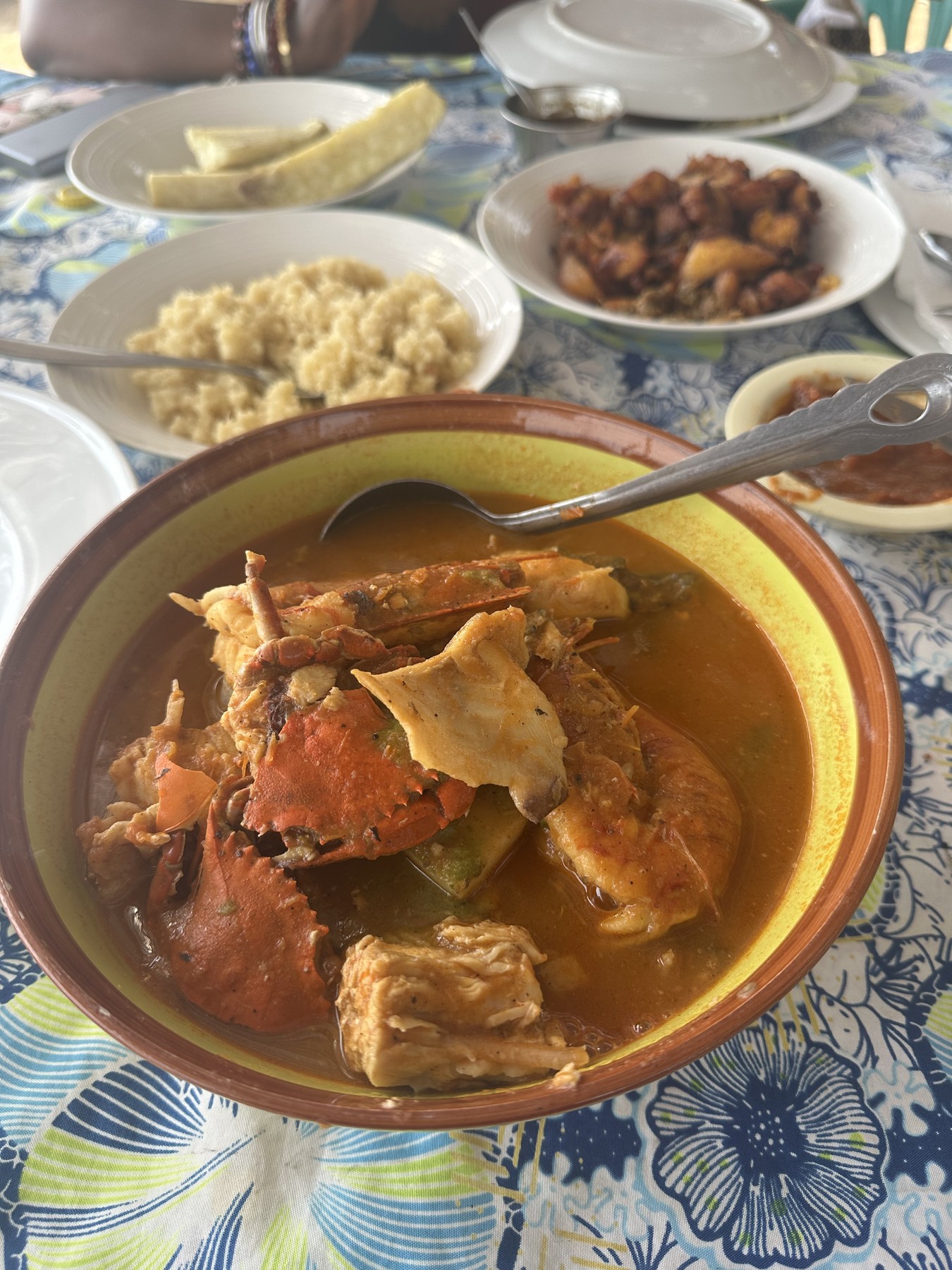
  • Connect people by food : l’interculturalité alimentaire au cœur de Metraltus

    Connect people by food : l’interculturalité alimentaire au cœur de Metraltus

    Manger ensemble ne suffit pas à se comprendre. Mais l’alimentation peut devenir une infrastructure de rencontre lorsqu’elle relie les personnes, les territoires, les mémoires, la nutrition et les savoirs dans une relation équitable.

    Metraltus ouvre un nouveau chantier de recherche consacré à l’interculturalité alimentaire. Il ne s’agit pas d’ajouter une discipline à une autre, ni de juxtaposer des cuisines dans un catalogue. L’interculturalité observe ce qui se passe lorsque des pratiques, des langues, des histoires et des normes se rencontrent : ce qui est traduit, transformé, transmis, discuté ou protégé.

    L’Afrique n’est pas une cuisine unique. Ses systèmes alimentaires sont multiples, historiques et connectés au reste du monde par les migrations, le commerce, les diasporas, les circulations de plantes et les héritages coloniaux. Une recette peut porter un savoir agricole, une mémoire familiale, un interdit religieux, une adaptation économique et une expérience de déplacement. La comprendre exige de relier ces dimensions.

    Le programme Connect people by food propose quatre engagements :

    1. documenter les aliments avec leurs noms, variantes, gestes et contextes ;
    2. relier analyse nutritionnelle, plaisir, accès et désirabilité culturelle ;
    3. construire des ontologies et graphes multilingues qui conservent provenance, incertitude et droits ;
    4. concevoir des expériences de médiation — ateliers, récits, cartes et outils numériques — fondées sur la réciprocité.

    Nos futures données devront être à la fois FAIR — trouvables, accessibles, interopérables et réutilisables — et CARE : orientées vers le bénéfice collectif, l’autorité, la responsabilité et l’éthique. Une intelligence artificielle alimentaire utile ne doit pas parler à la place des communautés. Elle doit indiquer ses sources, ses limites et les conditions d’une révision humaine.

    Ce chantier nourrit Prima Ontologia, le graphe de connaissances Metraltus, les travaux sur l’IA agricole africaine et nos programmes de formation continue. Sa question directrice est simple et exigeante : comment relier par la nourriture sans réduire, approprier ni invisibiliser ?

    Connect people by food : faire du repas un espace de connaissance partagée, de traduction et de coopération.

    Photographie : Jean Franck Galliano / Metraltus.
  • What is an ontology?

    In information science, an ontology is a formal, shared representation of the concepts in a domain and the relationships among them.

    More than a glossary

    An ontology defines classes such as FoodProduct, Producer, Territory or Observation; properties such as producedBy, locatedIn or supportedByEvidence; and constraints that state how those concepts may be used. The Web Ontology Language OWL 2, standardised by the World Wide Web Consortium (W3C), was designed so that ontologies can be developed, exchanged and processed by machines.

    A glossary explains words, while an ontology makes some of their logical structure explicit. It is also not the same as a database schema: a schema organises storage, whereas an ontology can connect heterogeneous datasets, declare equivalences and exclusions, and support reasoning. Nor is it identical to a knowledge graph. The ontology supplies a conceptual and logical model; the graph contains entities and relations described through that model.

    How is an ontology built?

    Its scope and intended users must first be defined. Existing standards should be reused where appropriate. Concepts and relations must be documented, competency questions should test what the model needs to answer, and logical checks should detect contradictions. Versioning, provenance and governance are as important as syntax because categories can affect whose knowledge becomes visible.

    For food systems, an ontology can connect products, species, processes, producers, territories, measurements, standards, legal claims and cultural knowledge without forcing them into one flat table. It can distinguish an unknown value from a measured zero, a claim from verified evidence, and a local term from a taxonomic identity.

    What this means for Metraltus

    For Metraltus, the ontology is an epistemic infrastructure: it states what the system is allowed to say, how evidence supports a statement and where uncertainty remains. Its quality must be evaluated technically and with domain communities. Formal consistency cannot replace participatory legitimacy, but it can make definitions, assumptions and consequences inspectable.

    Reference

    W3C, OWL 2 Web Ontology Language Document Overview.

  • What is precision agriculture?

    Precision agriculture is a management strategy that uses observations about spatial and temporal variability to support more targeted decisions.

    Information for site-specific management

    The United States Department of Agriculture describes precision agriculture as information- and technology-based, site-specific management using data about soils, crops, nutrients, pests, moisture or yield to improve profitability, sustainability and environmental protection.

    The key idea is right intervention, right place, right time—but precision is not synonymous with automation. A farmer can use a simple georeferenced soil map, while another system may combine satellite imagery, weather stations, connected sensors, drones, machine learning and variable-rate equipment. The common principle is that management responds to measured differences instead of treating every field, animal or moment as identical.

    A complete decision pipeline

    A typical pipeline begins with observation, followed by data quality control, spatial or temporal analysis, a recommendation, an intervention and an evaluation of its effects. Each stage introduces uncertainty. A sensor may be poorly calibrated; satellite imagery may be obscured by cloud; a model trained elsewhere may not transfer to a new soil, crop or farming system. Human expertise and local agronomic knowledge remain essential.

    Potential benefits include more efficient use of water, fertiliser and crop-protection products, earlier detection of stress, better records and the ability to compare management zones. Risks include cost, connectivity and skill barriers, dependence on proprietary platforms, weak interoperability, cybersecurity problems, inappropriate recommendations and loss of data sovereignty.

    What this means for Metraltus

    For Metraltus, precision agriculture is one evidence stream within a wider food-system model. Measurements need provenance: what was observed, with which instrument, when, where, under which calibration and with what uncertainty. The resulting recommendation must be auditable and open to human correction. Precision is valuable when it supports situated decision making—not when it presents a fragile estimate as an unquestionable fact.

    References

    USDA Natural Resources Conservation Service, Precision Agriculture: NRCS Support for Emerging Technologies; USDA National Agricultural Library, NALT: precision agriculture.

  • What is agroecology?

    Agroecology is a holistic approach to agriculture and food systems that combines ecological science, practical knowledge and questions of social organisation.

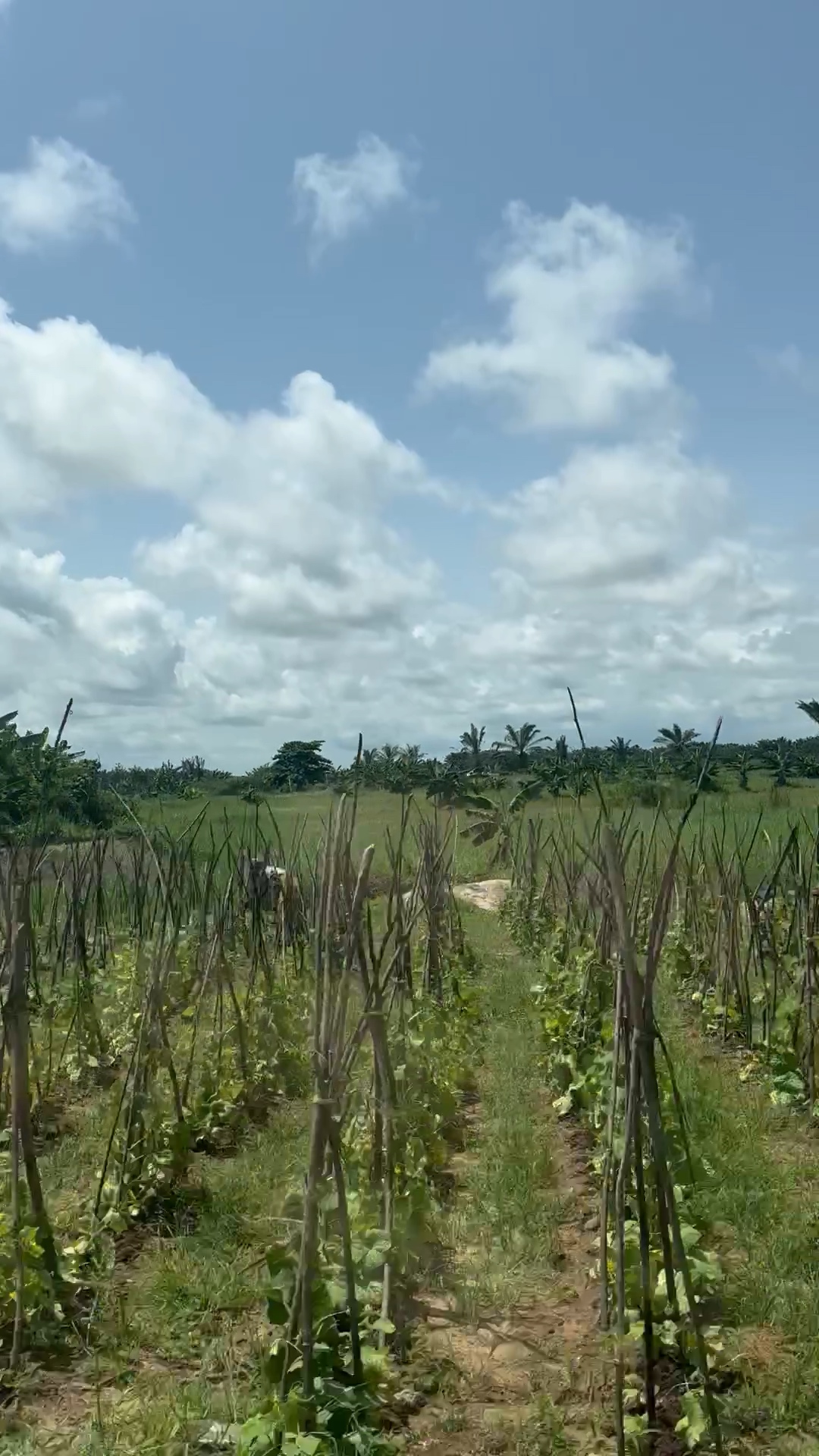
    Cultures and agricultural landscape in Côte d’Ivoire.
    Agricultural landscape in Côte d’Ivoire. © Metraltus, 2026.

    Science, practices and social transformation

    The Food and Agriculture Organization of the United Nations (FAO) defines agroecology as an integrated approach applying ecological and social concepts and principles to the design and management of sustainable agriculture and food systems. Its purpose is not to impose one universal recipe, but to improve the relationships among plants, animals, people and their environment in a specific territory.

    Agroecology can be understood simultaneously as a scientific field, a set of practices and a process of social change. On farms and landscapes, it may involve crop diversity, agroforestry, rotations, recycling of biomass and nutrients, biological regulation, soil-cover management or crop–livestock integration. Techniques alone are not enough: knowledge sharing, cultural food traditions, equity, governance and economic relations also shape a transition.

    Ten interdependent elements

    FAO organises this complexity through ten elements: diversity, synergies, efficiency, recycling, resilience, co-creation and sharing of knowledge, human and social values, culture and food traditions, responsible governance, and circular and solidarity economy. They form a guide for diagnosis and action—not a simple certification checklist.

    Agroecology must therefore not be confused with a single production label. A useful practice does not automatically make an entire system agroecological. Conversely, a technically efficient intervention can undermine a transition if it concentrates control, excludes local knowledge or shifts environmental costs elsewhere.

    What this means for Metraltus

    For Metraltus, agroecology provides both scientific criteria and a warning against decontextualised data. Digital tools should help document diversity, interactions, uncertainty and local knowledge. Evaluation must include who benefits, who controls the data, and whether the system becomes more resilient and equitable—not only whether a model predicts yield accurately.

    References

    FAO, What is agroecology? and The 10 Elements of Agroecology.

  • What is a food system?

    A food system is more than a supply chain. It is the connected set of people, organisations, resources, rules and activities through which food is produced, processed, transported, traded, prepared, consumed and eventually disposed of or reused.

    Lagoon landscape and urban horizon in West Africa.
    Lagoon, city and territory in West Africa. © Jean Franck Galliano / Metraltus.

    From field to society

    The Food and Agriculture Organization of the United Nations (FAO) places food activities within their economic, social and natural environments. Farmers, fishers, processors, transporters, traders, retailers, public authorities and consumers all participate. So do less visible services: finance, infrastructure, research, extension, standards, information systems and law.

    The term agrifood system is broader. It also covers non-food agricultural products such as fibres, biomass, forestry products and feedstocks. There is no single universal system: local and export-oriented, formal and informal, rural and urban systems coexist and overlap.

    Why use a systems perspective?

    A decision in one part of the system can create consequences elsewhere. Increasing output does not by itself guarantee access to nutritious food, decent livelihoods or the preservation of soil and water. A systems analysis therefore asks: where are the boundaries; who acts and decides; which material, financial and informational flows connect them; and what outcomes are produced for nutrition, equity, livelihoods and the environment?

    It also studies feedback loops and trade-offs. A new processing technology may reduce losses while increasing energy demand. A quality standard may protect consumers while excluding small producers unable to document compliance. Understanding these interactions is essential before claiming that an intervention is sustainable.

    What this means for Metraltus

    For Metraltus, the food-system lens is the scale at which data become meaningful. A product is not represented only by its ingredients or price, but through its relations with producers, practices, territories, ecosystems, institutions and forms of knowledge. Traceability records, ontologies and knowledge graphs must therefore preserve context rather than reduce the system to a linear chain.

    Reference

    FAO, Agrifood Systems and FAQ on agrifood systems transformation.

  • Hello world!

    Welcome to WordPress. This is your first post. Edit or delete it, then start writing!